
The Plinko board, famously known from the game show «The Price Is Right,» has captivated audiences with its mesmerizing fall of chips as they navigate the myriad pegs on their way down. Understanding the underlying physics is essential to appreciate why the Plinko board operates as it does. To dive even deeper, visit Plinko Board Physics During Demo Play plinko-casino-game.co.nz for an interactive experience.

The Mechanics of Plinko
Plinko boards are designed as simple yet effective devices to illustrate the principles of physics in action. At its core, the game involves a vertical board with pegs arranged in a random pattern. These pegs force the falling chips to bounce, leading to unpredictable outcomes as they make their way to various slots corresponding to different prizes.
Principles of Gravity and Momentum
The primary force at work in a Plinko board is gravity. As players drop their chips from the top of the board, gravity pulls the chips downward, accelerating them toward the bottom. The acceleration due to gravity leads to increasing speed while the chip is free-falling. As the chip encounters each peg, it gains momentum, leading to varying trajectories after each interaction with the pegs. Understanding these principles helps explain how chips can land in various slots that may seem impossible at first glance.
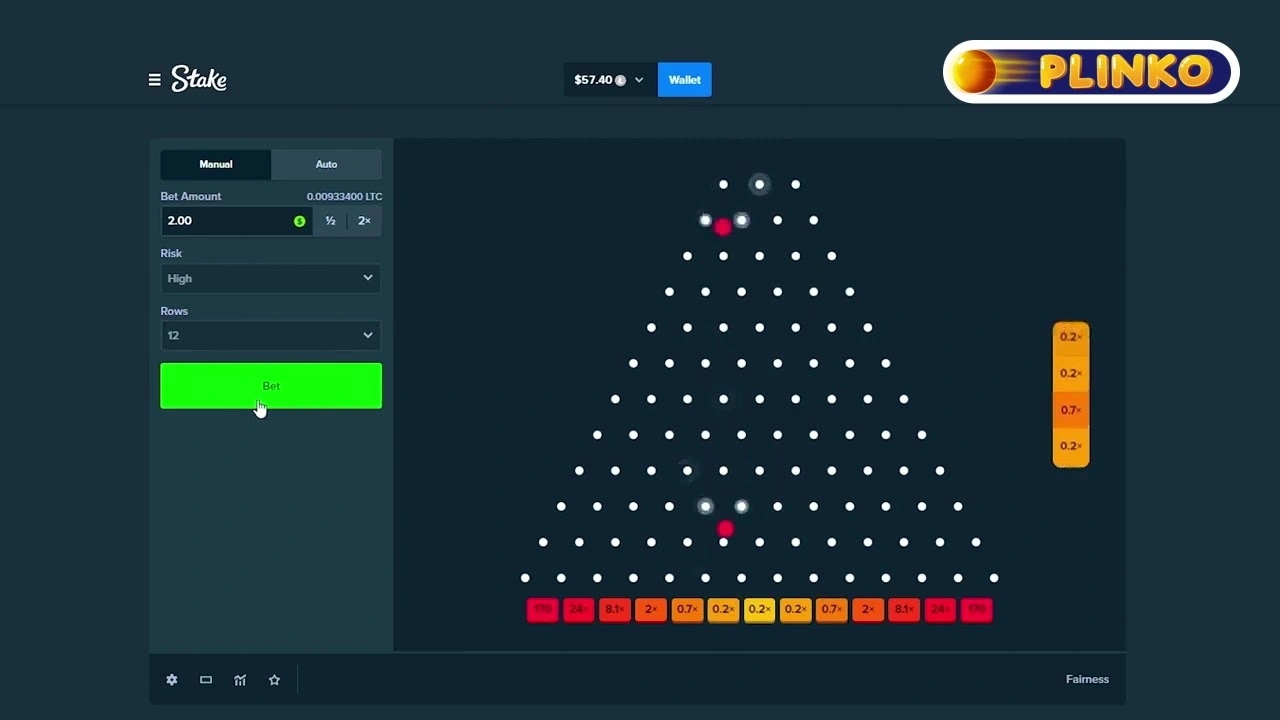
Angular Momentum and Rebound
Each time a chip hits a peg, it does so at an angle that introduces angular momentum into the system. The chip’s trajectory changes not only because of gravity but also due to the angle of impact with the pegs. Depending on how the chip strikes a peg, it can rebound in different directions, affecting its final position. This randomness mimics the unpredictability of many real-world phenomena influenced by various forces acting simultaneously.
Randomness and Probability
The randomness of a Plinko game is another critical aspect affecting the outcome of the chip’s journey. As chips navigate through the pegs, they encounter resistance that can lead to erratic movement. Statistically, while it may appear chaotic, there is a probability distribution that can be analyzed. Over a large number of trials, the distribution of where chips land tends to normalize, following a bell curve. Understanding this distribution helps players strategize their chip placement, although each individual drop remains uncertain.
Design and Construction of Plinko Boards
The design of a Plinko board significantly impacts its functionality and the physics involved. Boards are typically constructed with sturdy materials to withstand the repeated drops of chips, while the arrangement of pegs plays a crucial role in determining chip trajectories. The spacing and alignment of pegs can affect bounce angles and, consequently, the outcomes of the game. Experimenting with different designs can showcase variations in physics applications, highlighting how small changes can lead to different dynamics.
Simulating Plinko Physics in Software
Modern technology allows enthusiasts to simulate Plinko board physics in virtual environments. These simulations can be used for educational purposes, providing a deeper understanding of concepts like momentum, angular velocity, and probability distributions. By adjusting parameters in the simulation, users can observe how changing peg placements, chip weights, or drop heights influences the final outcomes. This interactive learning approach reinforces theoretical concepts in a visually engaging manner.
Practical Applications of Plinko Physics
While the Plinko board is primarily seen as a game, the physics principles it showcases have broader applications. The concepts of gravity, momentum, and probability are fundamental to various fields, including engineering, finance, and physics research. Understanding how these principles interact can lead to better designs in everything from roller coasters to random selection processes in computer algorithms.
The Role of Friction in the Plinko Board
Another significant factor in the physics of the Plinko board is friction. The material of the pegs, the board surface, and the chips all contribute to the friction experienced during a chip’s descent. This friction can affect the velocity of the chips when they make contact with pegs and can cause energy loss, leading to slower-than-expected descents. Analyzing these factors can provide insight into energy conservation and transfer principles.
Conclusion
The Plinko board serves as an engaging tool to explore the intricate interplay of physics concepts. By understanding the mechanics involved—from gravity and momentum to randomness and friction—players can enrich their experience and appreciate the scientific principles at play. As simple as the game may seem, it opens a window into the complexity of physical laws in action.